Showing posts with label Chickens. Show all posts

Tuesday, February 6, 2018

Winter on the urban farm and my new favorite chicken accessory

I am back after spending a couple of months working a short-term lab job in an attempt to give my mind something to think about during the long, dark days of winter, and to make a few bucks for my early spring hiking trip with my dad-- spiritual pilgrimage, bonding experience, real world Spanish practice, and the chance to use teeny, tiny backpacking accessories. I'm hoping to get some good photos and experiences worth sharing here.

For now, here's a quick update on the urban farm!

The days are getting longer and brighter!

With spring not too far off, even the snowy days seem more livable! The chickens don't like free-ranging in snow, though, so I'm looking forward to some grass for them to walk around on.

Did I mention that you can freeze whole tomatoes if you want to put off processing them?

I core them, squeeze out the seeds, and store them in zip lock bags. When frozen they are like billiard balls.


I froze these in August or early September and just turned them into spaghetti sauce in January. Because I had the freezer space (and it's easier) I decided the freeze the sauce in baggies instead of canning. I'll be sure to use this batch before my canned sauce.

The product that is going to change my view of winter chickens: 

If you keep chickens where it freezes at night, you need this heated bucket!
In the summer I use a similar watering bucket with nipples (to keep the water fresh and reduce the number of water changes). But in the winter, even with a bucket heater, the nipples freeze, so I'm back to using a dish and heater, and I have to change the dirty water at least daily. This is my new favorite water bucket (the best $40 I've spent all year). It provides clean, liquid water all winter, and I can unplug it and use it all summer, too. Fantastic! Buy it here or at your local farm supply store.


Thursday, October 12, 2017

I heart my chest freezer

Until the last few days, the warm weather has been hanging on, and we've all been outside wearing shorts and riding bikes. But all that nice weather keeps the tomatoes ripening, and without intervention all the ones my family cannot eat (and that would be most of them) would go bad.

I know people love their iPhones, giant televisions, and salted caramel lattes, but to love a chest freezer is a special kind of love. This humble, quiet, out-of-the-way appliance allows me to enjoy the end of summer.

In the past, canning was done on a hot day in a hot kitchen. (If you haven't canned before, the house can heat up to a sweltering temperature if it's still warm outside.) Canning would be an ideal cold weather activity, like baking bread or making a hearty soup. A friend let me in on a secret a few years ago that changed my canning forever. She told me that you can freeze tomatoes whole in plastic bags and then take them out whenever you're ready to can. And if you let them warm up at room temperature, the skins come off without having to boil them, which is amazing when you are making a chunky tomato sauce or salsa!


My newest spaghetti sauce method is to core each tomato, squeeze out some of the seeds, and then freeze them all in gallon sized bags. When I'm ready to can, I make the sauce with the skins on (which adds additional nutrients) and then zip the sauce in the high speed blender to pulverize the skins and any remaining seeds before canning.

Many fruits and veggies are easy to freeze and use right from the freezer: sliced peppers and any kind of berry are two of my favorites.

This week at the urban farm

Now that soup weather is upon us, I've started harvesting the leeks. A lot of soup recipes call for leeks, but they are also good in many recipes in place of onions or roasted in the oven with other fall vegetables.

The chickens are just starting their first molt, and because of this egg production is almost nil. Hopefully I will have more to report on this soon! They have had a good summer of romping around the yard and have appreciated the vegetable scraps this season.

The tomatoes and flowers are the last summer plants I will pull out of the garden. The tomatoes will go when they stop ripening on the vine (I'll put the pink ones in the window and ripen them indoors). The flowers will go once they die or we get a hard freeze and the butterflies are gone for the year, whichever comes first.


A note on fall eating and cooking: it's almost time to celebrate the harvest with fall meals: butternut squash soup, spaghetti and lasagna feasts, vegetables caramelized over time in warm ovens, stuffed and roasted acorn squash! Enjoy eating these warm and cozy foods; I hope you are all having a fantastic end of season!

Tuesday, April 18, 2017

Spring tour of the urban farm

Spring is in high gear and there are chores all around! I love this time of year because there is always something going on. Below are some pictures I took yesterday to show how the plants and projects are coming along. If the weather stays nice and all goes well, we should be good to go for the first spring farmers' market on May 11!


Plants to sell at the first markets. The peppers are getting really big!

Taking a peek under the row cover, the green (front) and red (back) lettuce varieties are growing well now that the weather has warmed up.

The kale is looking good, too.

My dad and I built the last of the new beds yesterday. This one will be for some of our market cut flowers. (Now to build the fence to keep the animals out!)

The chickens love the spring sunshine! Me too!

Thursday, December 8, 2016

5 chicken lessons (see you in 2017!)

This is going to be my last post of 2016. I'm looking forward to spending the last half of December focusing on family and the holidays and hopefully enjoying some new, deep snow on my fat bike. I will, of course, still be tending to the urban farm's chickens and indoor plants, and starting in January I will officially kick off the new growing season, so there will be a lot to talk about next year!

So now for my chicken lessons learned:

1. Chickens hate snow. I let them outside to run around after we got a few inches the other day, and they immediately ran under the big evergreen tree and refused to walk back to their coop. (I chased them, caught them--eventually-- and carried them one by one over the irritating white stuff!). I'm glad that we built a covered run so they can get some sunlight and hang out snow-free.

Until we can find some hen-sized snow boots, the chickens aren't having anything to do with it.

2. Chickens love to stand on top of things. I now feel extra sorry for the factory farmed chickens who have to walk around on the ground all day. Chickens love being high up and playing queen of the hill. The "playground" equipment in their run should keep them more entertained over the winter and will hopefully keep them from trying to stand on top of their feeder.

This wood from a friend's cut tree works great!
3. Providing water in freezing temperatures is a challenge and having electricity in the coop really helps things out. We have finally settled on a system (until I can find a better one) where there are two sources of water. The first is a Hen Hydrator with a bucket heater. The water in the bucket stays thawed, but the nipples freeze overnight and don't thaw until quite a while after sunrise-- this doesn't mean that the day has to get warm, but when the sun comes up there is usually enough radiant energy to thaw them out. I'm going to really like this hydrator once spring arrives. It's easy to fill and see-through so you know how much water you have. It's also keeps the water source very clean!

FFA-approved (except, apparently, in freezing weather).
The backup system is a heavy, shallow, rubber bowl that I put fresh water into each morning before the sun comes up. This water (surprisingly) has been staying thawed throughout the day, even when the outside temperature stays well below freezing (see item #4). We'll see what happens when the high temperature is 0F. If it gets too cold I will remove the Hen Hydrator and put the bucket heater into the rubber bowl.

It doesn't stay as clean as the hydrator, but it won't tip over and if I need to put the bucket heater in it over the coldest winter days I can.

4. Coop winterizing is essential. We keep hardy breeds, but protecting their run from wind and snow has proved very worthwhile. The plastic not only keeps the run dry, but it's significantly warmer than outside in the wind. And since we have a source of electricity, a heating lamp can be used in the run if needed. I've also installed temporary weather stripping in the coop, so they can stay warm over the long, cold nights.


The run is covered on three sized by thick plastic sheeting. The hens like sunning in the open south side.
5. Hens like having a sand box. The chicken run is built over an old children's sand box, so the soil is very sandy in some areas. They hens love to take dust baths, and over time they dug a 6 inch hole in one spot. Today I filled it in with some new sand. This will give them something to dust with and dig around in over the long, snowy days when they'd rather be foraging for worms and grass in the yard.

I added new sand so they wouldn't dig themselves out of the run!

Happy holidays, Merry Christmas, Happy New Year, and Peace on Earth! See you back here in 2017!


Monday, November 28, 2016

Indoor/Outdoor

Last of the outdoor harvests

The upper Midwest is getting a very late start to winter this year, so I was able to harvest salad greens and kale through end of November! But it's freezing at night more consistently now, and this week our hardy Swiss chard finally gave in to the cold. So even though tomorrow is supposed to be up close to 50F, I'm calling it-- winter is here! Time to bring in the last of the fall veggies.

These are the Short 'n Sweet variety of carrot that does well in shallow beds or heavy soil. They are also very sweet and I like to roast them whole.

The hens love eating the leftovers and scraps! I'm also working to winterize the chicken run with plastic on the north and west sides to protect from wind and blowing snow.

Last of the outdoor greens. Frost-sweetened and delicious! I could use a double walled tunnel to continue to grow outdoors, but since I have the space and interest, I have decided to move production inside for the rest of the winter.

Oregano has been a very productive herb. It is very hardy, disease resistant, and saves beautifully. I harvested it today, picked off any bad leaves, washed it and air dried it on a towel.

Then I then bunched it up and hung it to dry. Once it's dry (a week or two), I'll break up the leaves with my fingers and put it in an airtight container.


Setting up and testing out the new indoor grow space

I've always had an interest in indoor growing-- greenhouses have been a part of my entire adult life until very recently. But since we currently don't have a greenhouse, I'm exploring indoor options. The main purpose of this growing space will be for seed starting. It will allow us to save money on plants (seeds are much cheaper to buy than seedlings) and will allow us to produce interesting and more well-adapted varieties on the urban farm.


The new lights reflect a lot of the light produced, saving energy and providing the bright light needed for young plants.

The test basil is looking good! I can't wait to eat it!

Another test is with tomato seeds/seedlings. We want to make sure our transplants next spring are sturdy and healthy, so I'm looking at different distances between plants and lights.

I've also started growing lettuce indoors for my own wintertime salads. Perhaps someday I'll be able to produce enough to sell. For now I'll share it with dinner guests! 

I hope everyone had a wonderful Thanksgiving holiday! It's a great time of year to visit family, catch up with friends, or spend some time with yourself doing something that you love!

Monday, November 7, 2016

The urban farm in four short bullet points

I've been working on our farm plan, and one important step for me is determining the big picture of what our farm stands for and what our goals are. Today I'd like to introduce the four ideas that determine how the farm is run, what and how we grow, and the reasons behind our bicycle-themed name.

1. Two Wheels Urban Farm grows food sustainably using only organic practices. We do not use synthetic fertilizers, herbicides or pesticides, nor do we plant genetically modified seeds.

2. We farm in town, taking advantage of land that would otherwise grow only grass.

3. By living and farming in the city, we are able to use bikes as a major source of transportation as well as recreation. The farm has an ongoing goal to utilize bicycles for more than 50% of all trips.

4. We strive to make farming as local and accessible as possible, growing and marketing delicious food, while fostering relationships with consumers and neighbors and reducing food miles.


Speaks for itself!

Living and farming in town offers many opportunities to bike for pleasure and transportation.

This week at the urban farm

This past week we finished building the raised beds at the home plot. Before the weather turns cold I'll have them all filled and ready to compost over the fall and winter. By spring, with some added finished compost before planting, we should be good to grow!


The new raised beds more than double the growing space at our home plot, and because they are terraced, our hill is now farmable!

Even though my instincts tell me this could be a bad idea, one of our hens now has a name: meet Lucy, the Buff Orpington with the small comb. She enjoys long walks around the yard, eating worms in freshly turned soil, and peeking into the window to spy on unsuspecting humans.


Lucy has captured the heart of our family, especially my mom and DD.

We're also already thinking about spring around here and experimenting with our new light system. Can't wait to start growing next season's seedlings!


Some barely sprouted test tomatoes seem very healthy under the lights.

Thursday, September 29, 2016

Expand-o-matic

As the summer winds down, I have been thinking about the future of the urban farm. My goal for next year is to produce enough vegetables to both feed my family and sell some at a local farmer's market.

I need more space!

I have a couple of options, in addition to the new raised beds I'm going to add next year...

1) Use land in other people's backyards. This would be the ideal way for me to keep my urban farm truly urban, while also putting someone's abandoned garden to good use or transforming lawn into something productive. Additionally, people who may want a vegetable garden-- but don't want to take care of one-- can enjoy the look of a garden along with eating fresh veggies grown right at home.

It might look something like this: I plant four plots in your back yard. You provide the chemical-free land and water and I do all the planting and maintenance. Two plots I harvest for me and two plots I harvest for you. (If you're interested in this option, please let me know!)

2) Rent or buy land. Buying an acreage is something we have been thinking about as a back-up plan. For now we could use the land for planting veggies and fruits and eventually build a house. I like living in the city, however, so this is an issue to overcome. Another option is renting land (an acre or less) and using it as my urban farm extension.


This week at the urban farm:


As I remove plants from the beds, some of them go to the chickens. In this photo they are enjoying a green bean plant. Most of the late pods I kept for next year's seed, but they got to enjoy eating these extra plants.


For the beds that are finished for the year I am using winter rye as a cover crop. This keeps the soil in place during the fall rains and adds organic material. It also suppresses weeds and just looks nice and lush!


Fall carrots are coming along.


Spinach and lettuce should grow well into the fall. I am planning to get some into the cold frame and see how far into the winter we can have salads.

Tuesday, September 20, 2016

Chicken dinner

We here at the urban farm are a multi-generational household. My parents are big fans of the hens (or as they call them, "the girls") and are, in fact, the reason we have chickens. I had been talking about possibly keeping hens for years, so for my birthday this year they broke down and gave me a coop. I say "broke down," because at first they weren't big fans of the idea of chickens in the city. But now things have changed. My mom even has a Buff Orpington who must have imprinted on her early. The bird now thinks she is her mother and follows her around incessantly.


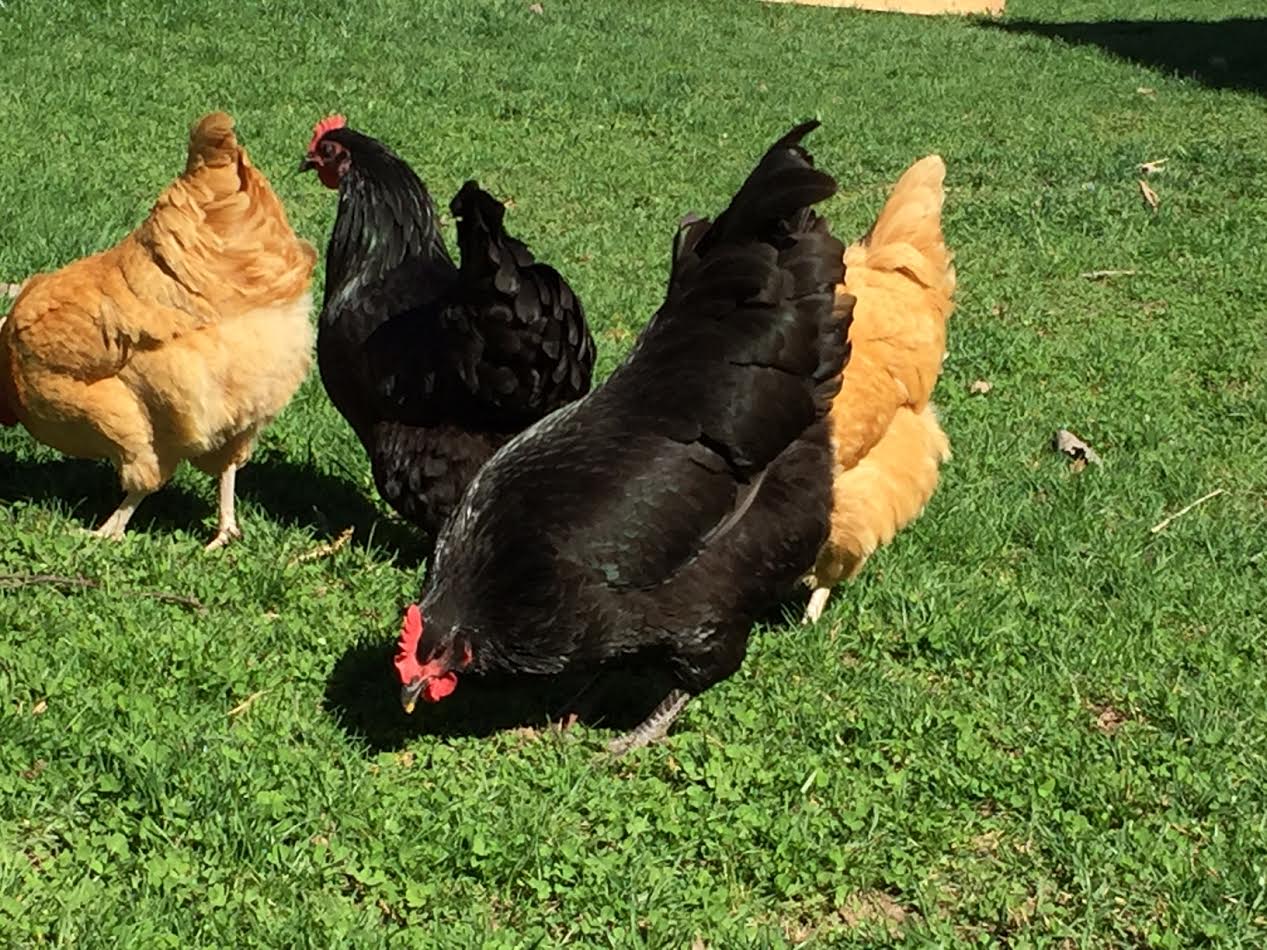
Two Australorps and a Buff enjoying a zucchini.

So it was surprising to me when my dad texted the other day asking if I'd like to have chicken and dumplings for dinner. I believe the text read something like, "you provide the Australorp and I'll make dinner." What?!? Was he saying we should eat one of our hens (who are just now barely starting to earn their keep by laying eggs)?


Not sure they are really sweet or docile. But they are beautiful.

Apparently my parents have noticed that the chickens have been doing some singing. Now that they are laying a few eggs, the hens (mostly the Australorps) sing what is called an egg song. Every heard one? You would definitely know it! Here's an example I found (hopefully I can catch mine in the act one day soon and film it for posterity): egg song. They only do this once a day, so it's hard to catch.

I enjoy living in town and actually like to hear our neighborhood's sounds--song birds, playing dogs, a bicycle bell, the owl that wakes me up occasionally, happy children, the trash truck, and even the noisy geese as they make their final decent to the pond on fall evenings. So I hope my parents and neighbors can find some joy in their song.

Have a great week everyone!


Psst... check out my Instagram photos! (Click that little blue button at the top right of this page)

Friday, September 2, 2016

The good, the bad, and the really darn ugly

Since returning on Sunday from a camping trip, I have been very busy this week harvesting, mowing, weeding, and cleaning up plots. As I start to take out the old summer veggies and plant the fall lettuce, spinach, and cabbage, I'm taking a good look at how everything has gone so far this season.


I gorge myself on salads all spring. About the time I am ready for salads again, fall is here I can plant them to my heart's stomach's content.

I'm still tallying up total pounds of vegetables and fruits produced, but this is my photo evaluation of things that are going well and some things that are just plain ugly.

First the ugly:

The tomatoes aren't picturesque as they once were. After a couple of strong thunderstorms, all of the tomatoes and tomatillos are lying sideways. The chickens are enjoying eating the ones that fall on the ground (luckily not too many), and tomatoes on the ground are also easy targets for hungry prairie voles. But nonetheless, the tomatoes are producing very well.

The bad (also really ugly):

The popcorn was almost completely devoured (most likely) by raccoons. But better them eat the corn than the chickens!


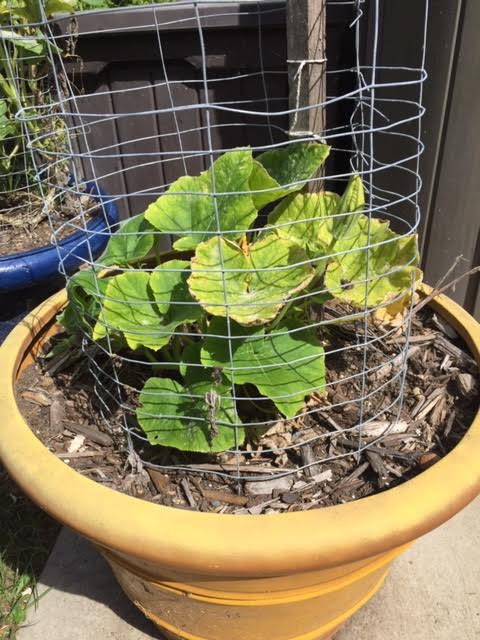
The potted butternut squash that stayed very small and hasn't produced a single fruit convinced me that I need to learn more about growing plants in containers.


And because I like to end on a happy note... the good:


In our case the chicken came before the egg. This is the Buff Orpington hen who's egg is pictured below. And as of yesterday there is a second chicken laying eggs!


Egg #1 (It was delicious!) These first eggs are tiny, but experienced urban chicken ranchers have told me that they will get larger over time as the hens mature.

I canned Bloody Mary Mix for this first time. Since I have so much pasta sauce, I decided to divert some tomatoes into brunch.

I've noticed a dramatic increase in pollinators with the addition of the teeny tiny rain garden. I am very pleased!

Friday, August 12, 2016

Perfect growing weather

I keep reading that the hot, rainy, and muggy Wisconsin summer is going to lead to a whopper of a corn and soybean harvest. They never mention food crops in these articles, but if eating local is a goal, this particular August would be a great time to take up the challenge. The past couple of weeks we have taken in a haul from the urban farm: tomatoes, okra, tomatillos, summer squash, cucumbers, onions, and peppers. The summer veggies are in full swing!


It looks like we should harvest at least 100 pounds of tomatoes this year (I'm keeping track so we'll see how close we get).

It's also a great time of year to buy local. This week I've found delicious organic sweet corn, honey, raw cheese, and beer.

Who says you need GMO Bt corn to have nice looking ears?

I love shopping at the local Willy Street Co-Op, but I do sometimes wander into Costco and find local foods in giant quantities at decent prices.

We have a rule to eat at least one of our urban farm raised vegetables with each meal (bonus if you eat two or more). But we have plenty of extras. I give some away when I see neighbors out in their yards, and I've been freezing and canning so we can continue to eat local all winter.


I learned this year that it is unsafe to can squash (my original plan). Good thing it freezes well!

Looking forward to making enchiladas with this tomatillo sauce.

And someday soon we'll have our own local, zero food mile eggs.

This pullet is looking warm!

Now I need to start thinking about planting fall crops...


Just like spring, so you have another chance to learn from mistakes and try new varieties.