Showing posts with label Planting. Show all posts

Thursday, March 23, 2017

Farming as a workout option

Two Wheels Urban Farm update

We have our first transplants in the ground! Today I put in the sugar snap pea sprouts, hoping to take advantage of the upcoming rains and warmer overnight temperatures. If all goes well, I should have some to bring to market in May.


Peas are in the ground!

Transplants are looking good. This little plant is kale.

Working out on the urban farm

This week my dad and I used shovels and a wheelbarrow to move 8 cubic yards of compost into the urban farm's garden plots (that's roughly 10,400 pounds of composted manure!). The compost is super important for the health of our crops and our soil's fertility and structure. It also combats pesky weeds and helps to hold moisture. All that hard work means tastier veggies this summer!


Our huge pile of compost-- I was so happy to see it arrive (and so much happier when we finished moving it!).


One of the benefits to this type of work is to the health of the farmer. According to my super scientific Googling, the average American office worker gets an average of 3,000 to 5,000 steps per day (this is supported by the office worker in our household who averages 4,000 steps). On just one of the days when we moved the compost I got 19,121 steps (this total does includes the 1/2 mile round trip walk to World of Beer for a much needed happy hour) and over the day I burned 3,062 calories. Not too shabby. And along with getting something important done, I didn't have to put on spandex!


What was I thinking ordering so much?!? 

I hope you all have a terrific week and a happy early growing season!


Tuesday, February 21, 2017

Rethinking spring

This week at Two Wheels Urban Farm

I realize this lovely spring is only going to last a few days before winter returns, but I'm really looking forward to warm weather sticking around for good! We have all of our seeds purchased and organized, and next week I will start sowing seeds indoors for spring transplants. I should also have a farmers' market update soon-- I'm excited to start selling produce and fresh flowers this summer. Stay tuned!


All this seed should keep me busy for a while!


Rethinking Spring

I returned on Sunday from my last vacation before the growing season starts, and it was a great trip! We ventured down into the Caribbean and I had a chance to tour around and check out tropical plants. I dreamed of what my urban farm might look like if it was in Jamaica or Key West-- bananas, plantains, bread fruit, all kinds of citrus, coconut, almond trees...


We visited local homes, parks, historical sites, and my favorite part was learning about the local trees and how they harvest and prepare the fruits.

We took a fantastic walking tour in Falmouth, Jamaica from a witty local named Erika. At the end of the tour she told us how 2016 had been the hottest on record in Jamaica, and from what I have read 2016 was the second hottest on record for the US. Interestingly, when we flew back to Milwaukee on February 19 it was a balmy 58 degrees-- if we had flown in the day before, it had been 67 degrees!

60 degree weather is a nice change!

So now I am wondering if I should adjust my planting schedule? For example, historically peppers are planted indoors on April 1 in this part of the country so they can be transplanted on June 1. In a more updated guide (one that I followed last year successfully), they recommend planting on March 4 and transplanting on May 13.

Should a grower trust the regional guides or push the dates because of an early, warm spring? Some things I think about:


1) Check out the land

Our home plots are at the bottom of a hill (where cold sinks) so that probably means we shouldn't push the dates too much. Is your land protected from wind and very sunny so that it warms up early? If so, you might be able to gain extra days. Raised beds also warm up faster than soil. And sandy soil warms up faster than soil with a lot of clay.

2) Protect the plants 

Another way to protect newly transplanted crops against an unusually cold night (or extend the season in general) is to cover the plants with a breathable row cover. Using a jar or a milk jug as a cloche overnight will also protect sensitive plants from frost.


Row cover can often protect down to 28F for early crops such as lettuce and spinach.

3) What is the value of transplanting early?

To someone hoping to be the first person to market with a red pepper, planting early might be a risk worth taking. But if you are growing to feed yourself and your family, you might not want to risk losing your plants to frost for the chance of an earlier harvest. Also, if you grow your own starts, it is less expensive to risk a plant than if you purchase plants from a nursery.

4) Take notes

Taking notes of when you plant/transplant will really help out next year. Even though our spring is coming earlier, from year to year the changes aren't that noticeable, so I am able to use the previous year or two as a guide. I make notes of what varieties and how many seeds I plant, when I plant indoors, when I transplant or direct seed outdoors, the protection I use to keep the plants warm (if I need to do that), and when and how much I harvest. I look back each spring to the year before and see what changes I can make and am also reminded of my own best practices.

5) You can always fall back on your local farmers' market

One nice thing about living in an area with a thriving farmers' market scene is that there are always veggies to buy and enjoy! If your tomatoes don't work out, or if you don't have the space to grow all of the varieties of peppers you enjoy, check out your local farmers' market. Local food eaten in season is fantastic!

Thursday, January 19, 2017

2017 Sneak Peek

The countdown to spring is on! It's hard to believe in only a month I will be planting the first seeds in the urban farm's grow room. In our northern climate, most vegetables have to be started indoors so that their growing season will be long enough. At first glance this may seem like a pain, but it gives veggie growers a chance to baby their plants and allow them to get big and healthy during those first weeks of life. Having a grow room is also just fun, and the grow lights really make the dark days of winter feel warm and bright.

For now, here's a preview of some of the vegetables that I am especially looking forward to planting, growing, harvesting, selling, and eating this year. If there is a veggie you are excited about, let me know!

Meet the Black Krim heirloom tomato. I've never grown a black/green tomato before, so I am very excited to try out this variety!

The Hungarian Hot Wax pepper is a hot pepper (like a jalapeno) but with the texture of a regular wax pepper. I think they would be great pickled or chopped up as a pizza topping.

Tatsoi was the most beautiful vegetable I saw on my WOOFing trip this fall, and I knew I needed to grow it. It's much like spinach and is good stir fried or even eaten raw in a salad. Here are some recipes for this Asian green.

I first had pickled daikon radish at a local restaurant, Graze, and I fell in love with this little root veggie. Here's a link with some other ways to enjoy them.

For years I ate the sauteed greens of chard and enjoyed their surprisingly salty flavor, but tossed the beautiful stems in the compost. I didn't really appreciate this veggie until summer 2016 when I learned that you can cook and eat the stems in much the same way as asparagus! Fantastic! Here's a recipe to get you started.

Friday, September 2, 2016

The good, the bad, and the really darn ugly

Since returning on Sunday from a camping trip, I have been very busy this week harvesting, mowing, weeding, and cleaning up plots. As I start to take out the old summer veggies and plant the fall lettuce, spinach, and cabbage, I'm taking a good look at how everything has gone so far this season.


I gorge myself on salads all spring. About the time I am ready for salads again, fall is here I can plant them to my heart's stomach's content.

I'm still tallying up total pounds of vegetables and fruits produced, but this is my photo evaluation of things that are going well and some things that are just plain ugly.

First the ugly:

The tomatoes aren't picturesque as they once were. After a couple of strong thunderstorms, all of the tomatoes and tomatillos are lying sideways. The chickens are enjoying eating the ones that fall on the ground (luckily not too many), and tomatoes on the ground are also easy targets for hungry prairie voles. But nonetheless, the tomatoes are producing very well.

The bad (also really ugly):

The popcorn was almost completely devoured (most likely) by raccoons. But better them eat the corn than the chickens!


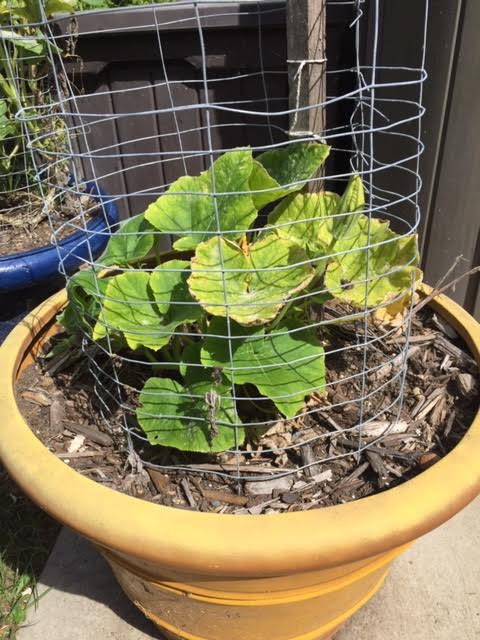
The potted butternut squash that stayed very small and hasn't produced a single fruit convinced me that I need to learn more about growing plants in containers.


And because I like to end on a happy note... the good:


In our case the chicken came before the egg. This is the Buff Orpington hen who's egg is pictured below. And as of yesterday there is a second chicken laying eggs!


Egg #1 (It was delicious!) These first eggs are tiny, but experienced urban chicken ranchers have told me that they will get larger over time as the hens mature.

I canned Bloody Mary Mix for this first time. Since I have so much pasta sauce, I decided to divert some tomatoes into brunch.

I've noticed a dramatic increase in pollinators with the addition of the teeny tiny rain garden. I am very pleased!

Friday, August 12, 2016

Perfect growing weather

I keep reading that the hot, rainy, and muggy Wisconsin summer is going to lead to a whopper of a corn and soybean harvest. They never mention food crops in these articles, but if eating local is a goal, this particular August would be a great time to take up the challenge. The past couple of weeks we have taken in a haul from the urban farm: tomatoes, okra, tomatillos, summer squash, cucumbers, onions, and peppers. The summer veggies are in full swing!


It looks like we should harvest at least 100 pounds of tomatoes this year (I'm keeping track so we'll see how close we get).

It's also a great time of year to buy local. This week I've found delicious organic sweet corn, honey, raw cheese, and beer.

Who says you need GMO Bt corn to have nice looking ears?

I love shopping at the local Willy Street Co-Op, but I do sometimes wander into Costco and find local foods in giant quantities at decent prices.

We have a rule to eat at least one of our urban farm raised vegetables with each meal (bonus if you eat two or more). But we have plenty of extras. I give some away when I see neighbors out in their yards, and I've been freezing and canning so we can continue to eat local all winter.


I learned this year that it is unsafe to can squash (my original plan). Good thing it freezes well!

Looking forward to making enchiladas with this tomatillo sauce.

And someday soon we'll have our own local, zero food mile eggs.

This pullet is looking warm!

Now I need to start thinking about planting fall crops...


Just like spring, so you have another chance to learn from mistakes and try new varieties.

Thursday, May 19, 2016

Do what you love; love what you do

I've been really busy this week planting, transplanting, weeding, mowing, finishing up projects, and eating salads, so I haven't started anything new. What I have been doing is thinking about luck and jobs and happiness. I used to think that people who loved their work were lucky, but I am now convinced that most people work hard to find a position in life that makes them get out of bed singing.

I am so happy with my new work that I forget what day it is and don't mind popping out of bed early in the morning. Last Sunday I was hanging out with some good friends talking about how nice it was that it was Saturday night. In my mind it felt like an evening to have fun and celebrate-- in the past I was afflicted with a "Monday dread" that often started as early as Sunday morning, and now I don't always know (or care) what day it is.

It is time well spent to work towards finding something you love to do that fits into the life you want to have. Money is certainly important (my friends and family can tell you that I am a planner and a saver and I love to stretch my dime!). That said, if taking a pay cut or having one person in a relationship step away from a paying job makes everyone happier and more sane, then it's well worth it. Life it too darn short to dread Mondays and waste every Sunday being unhappy. 


A week at the urban farm in photos

We've had a really cool May, but I think the raspberry harvest will be just fine.


Radish season is almost over (until fall) but salad greens are still going strong!

I transplanted these teeny tiny tomatoes a few days early and protected them from frost with mason jars. Many people's tomatoes have died, so I am feeling lucky to have waited.

As of this week, the gardens at home are mostly planted. Peppers, okra, winter squash, and other hot weather veggies will go in at the end of May.

The solar powered automatic coop door is a hit with the humans!


Farmer's Market Find of the Week

I like to see what's hot at the farmer's market (both to think about what I might sell someday and also to find the value of what I am working on). This delicious 16 oz. jar of spicy sweet pickles was $5.25.

Thursday, April 14, 2016

Onions and garlic, or spring has sprung!

This was a big week at the urban farm-- I transplanted for the first time this year outside of the hoop house. Despite waking up to snow flurries yesterday morning and the frost free date being a month away, there are no nights in the nine day forecast with freezing temperatures. I now am officially stricken with spring fever! (It also means I have been stricken with bike fever and will need to budget my time better so that I can fit in some rides along with work.)


You can't beat this outlook!
Onions

The first crop transplanted this week were the onions. I am testing out both the transplants I started from seed (Red Amposta and Yellow Sweet Spanish Utah) and sets (Yellow Stuttgarter).

The advantage to transplants grown from seeds are the amazing number of varieties available and the bulbs should grow larger. I have never used sets before, and I found out how easy they are-- just buy and plant. However, there were only three options available at my local garden store-- just one each of yellow, white, and red. From what I have read transplants produce onions that store better, though a friend from the community garden has had the opposite experience. I'm looking forward to seeing how they compare!


Sets: I selected the yellow option.

Transplants: they look small now, but I am excited to see how they turn out.

Because our urban farm has a small footprint, I am using intensive planting methods, many of which are described in the book All New Square Foot Gardening. According to this book, you can plant 12 onions per square foot. Since I am going to grow onions to full size, I decided to plant only 9 per square foot (this is at least double the density of my onions last year). Because of the high density, it is important to keep plants evenly spaced. I ran across a website that had a great tip, using a muffin pan to map out where to plant.


This muffin tin had the right spacing to give me 9 plants per square foot.

My muffin pan grid keeps me in line.

Garlic

I am very excited to plant garlic this year-- my first very first time trying it in my garden! I was lucky enough to have several bulbs of garlic leftover from my CSA. They stored very well over the winter, so these are a good variety to save. I broke up each bulb and planted the cloves, just like the onion sets.

Enjoy your early spring everyone!

Garlic cloves-- each one will yield one whole bulb.


Thursday, March 3, 2016

Spring is getting real around here

Ok, I admit there are still several inches of snow on the ground, but now is the time to start thinking about planting (actually, the summer veggie growing season started about 2 weeks ago!). In my first years of gardening I made the mistake of waiting until the first warm, sunny, true spring day (probably mid-May here in Wisconsin) to decide to plant. Because I was so late getting started, I hurried to the home and garden store, or worse, a big box home improvement store, to buy whatever veggie plants they had left over (since everyone else in town suddenly also had spring fever-- it is highly contagious). The veggie plants I bought were expensive and likely not the ideal varieties for my region. For this farmer who loves a little thrill, they were probably also very boring varieties. Pick up any seed catalog and you'll see just how many fun options you have.

Fast forward a few seasons... this year I am continuing a system I started last year:
  • buy seeds early
  • for long-season crops, plant them indoors on time 
  • transplant or direct seed outdoors as early as possible
These practices allow me to not only plant unique or delicious varieties that will grow well in Wisconsin, but by planting early I can extend my growing season and maximize on my rotations (early crops, mid/late season crops, and fall crops).

Right now my system is not so fancy: shelves in a bright, southern window with a few grow lights hung to provide extra light in the morning and evenings. In the future I want to build one of these babies:


But for now, I'll work with what I have. I started some onions two weeks ago (in the back) and my current batch of microgreens (in the front):


I ran across the very handy University of Wisconsin's regional planting guide (starting on page 5) that lets me know when to start different plants indoors and outdoors. It is fantastic and I'm not sure how I grew vegetables without it. I would guess most locations have a similar resource (in the US, a good first step would be to check with your local university extension agent).

For the second year in a row I am also writing down the varieties I grow, how many seeds I start, and what the germination percentage is. This is helpful for next year to know how much to plant and whether I should plant extra seeds to get the desired number of plants. Some notes from 2015:


I'm also trying out the kindergarten thrifty urban farmer paper cup method of starting seeds. I may need to transfer them to larger pots at some point, but I know some seeds won't germinate, and some plants will germinate that I won't need, and so this is a very cheap and easy way to get things started.


So March is here and my first year of urban farming full time is off to a good start! I planted those onions on Valentine's Day, and today I started the peppers and eggplant. And although fat biking on the local pond is a ton of fun, I am ready for the snow to melt!